
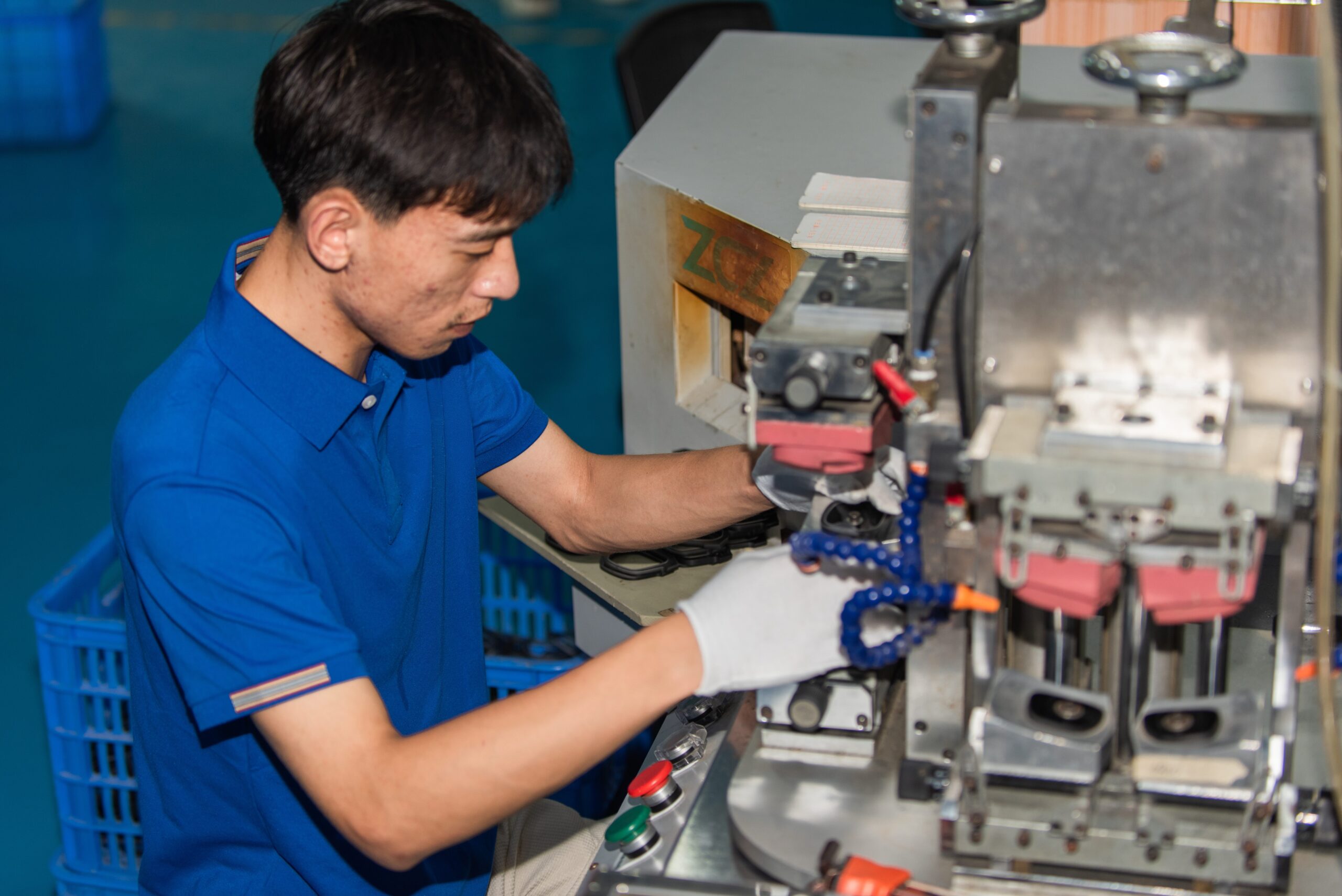
What is TR90 material? In eyewear, the name commonly describes a lightweight thermoplastic polyamide associated with flexible, injection-moulded frames. It supports optical, sun and active-lifestyle designs with thin forms, colour options and repeatable moulded geometry.
However, “TR90” should not be treated as a complete product specification. A finished frame’s performance also depends on the exact resin grade, mould design, processing settings, wall thickness, hinges, lens geometry and assembly. Buyers should ask the supplier to identify the proposed material and confirm it against the approved sample and project requirements.
TR90 is different from acetate and metal
Acetate frames are generally machined from sheets and then finished through processes such as tumbling and polishing. Metal frames rely on formed, machined, welded or brazed components followed by finishing and assembly. TR90-style frames are commonly produced through injection moulding, in which prepared thermoplastic material is formed inside a mould.
That route affects design decisions. Moulded frames need appropriate wall thickness, flow paths, draft and component interfaces. Rendered shapes may need engineering adjustments to mould consistently and retain lenses correctly.
Brands comparing options can start with D Marjan’s eyewear material solutions and then review the chosen construction during sampling. Material selection should follow the product brief rather than a general assumption that one material is always superior.
Why eyewear brands consider TR90 frame material
The route suits collections seeking a lightweight feel, controlled flexibility and injection-moulded shapes. It can support repeat production after design, tooling and process approval.
The material supplier EMS-GRIVORY publishes technical information for its Grilamid polyamide product family. A brand should rely on the technical data for the exact proposed grade rather than transferring a general family description to every frame sold as TR90.
How TR90 eyewear moves from concept to production
1. Product brief and technical design
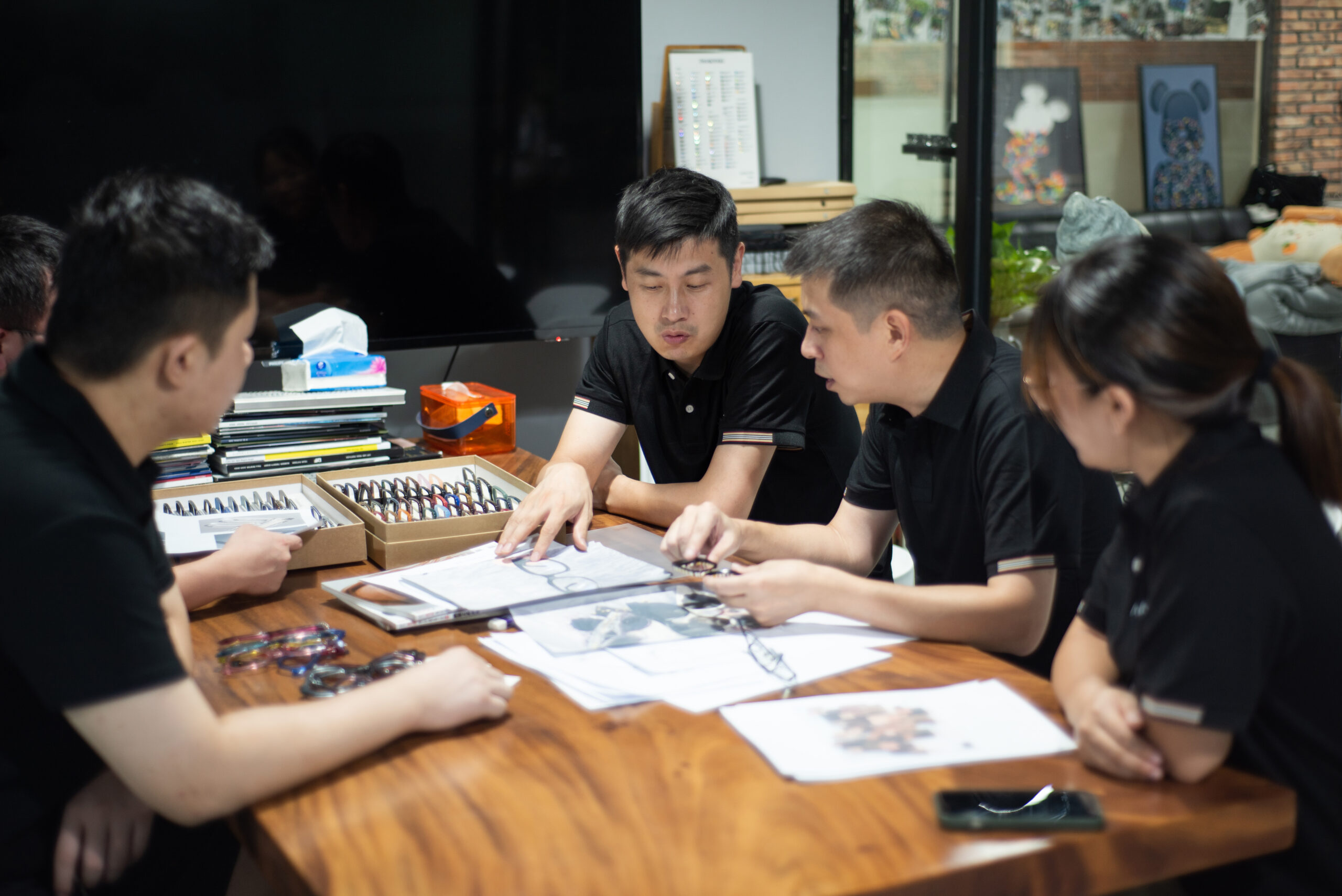
Development begins with target dimensions, lens shape, bridge concept, temple length, hinge construction and visual direction. The intended user and use case also matter. An optical frame, fashion sunglass and active product may require different geometry and validation.
D Marjan’s eyewear development process provides a framework for moving from a concept to defined specifications and samples.
2. Manufacturability review
The factory reviews whether the proposed geometry is suitable for moulding. Areas that are too thick, too thin or abruptly changing can create production challenges. Hinge inserts, decorative parts, logo positions and lens-retention features must also be considered.
3. Tooling and trials
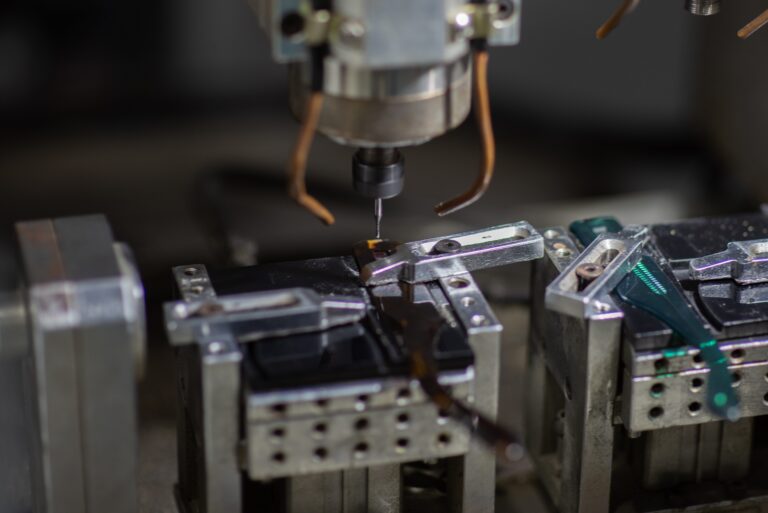
A custom construction may require dedicated mould tooling. Early trials help the team evaluate fill, surface appearance, dimensional stability and how the part behaves after cooling. Tool adjustments may be needed before the frame is ready for a formal sample.
4. Colour and component approval
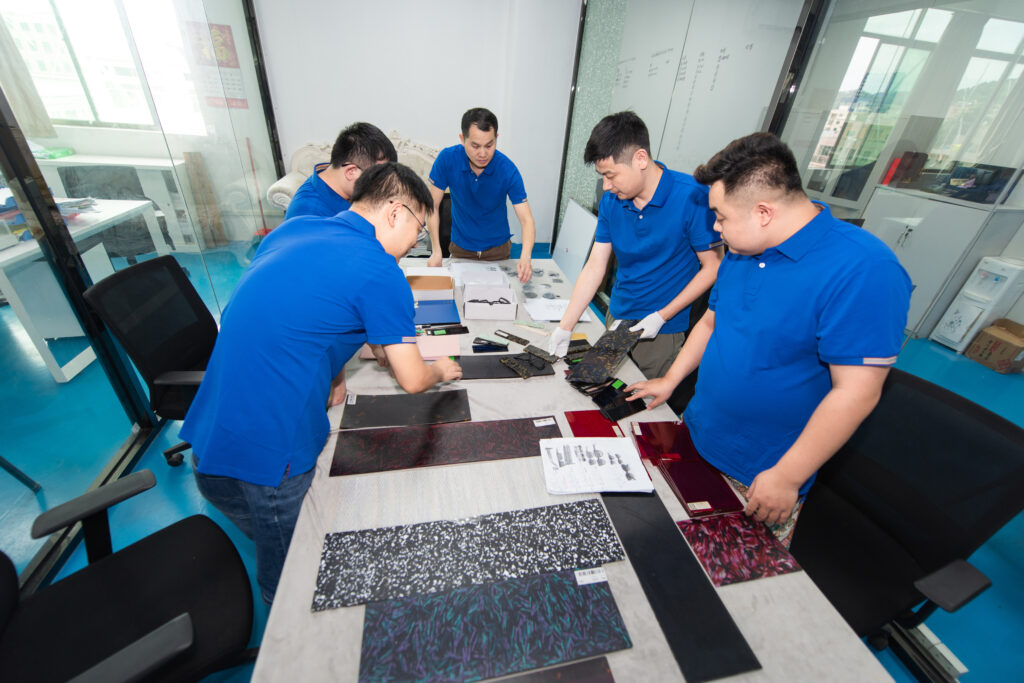
Colour should be approved on representative material, not only on a screen. Surface texture, thickness and lighting can change how a colour appears. Hinges, screws, temple details and logos should be reviewed as part of the assembled frame.
5. Assembly and lens fitting
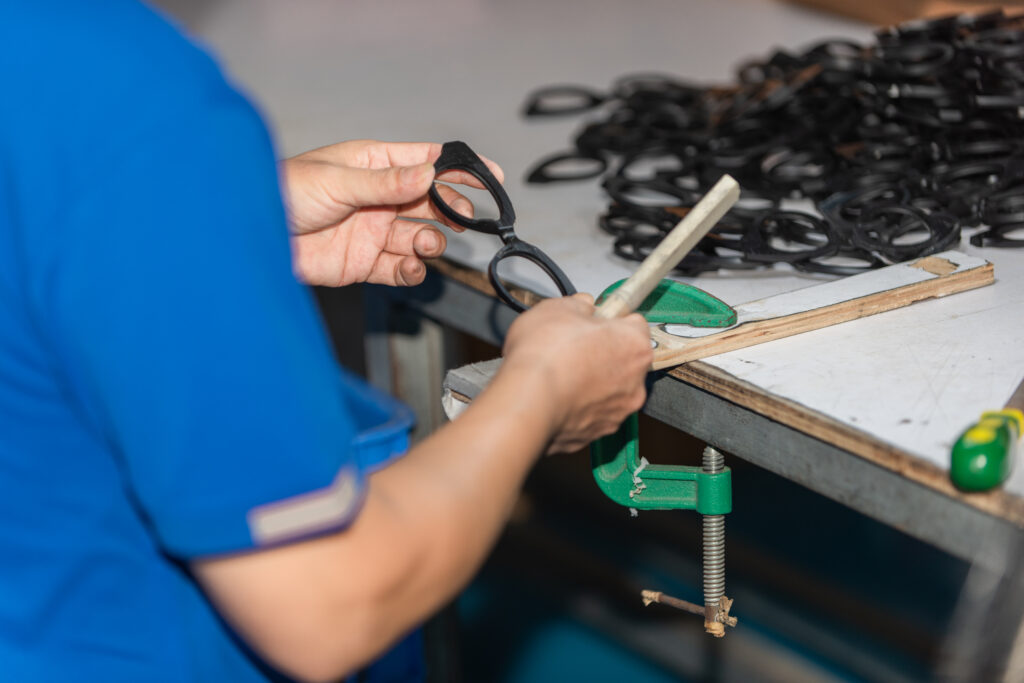
After moulding, components are assembled and the lenses are fitted. The manufacturer checks that temples operate correctly, the frame sits as intended and the lenses are retained without inappropriate stress. Alignment matters because a visually clean moulded part can still produce an uneven finished frame if assembly is not controlled.
What to inspect in TR90 glasses
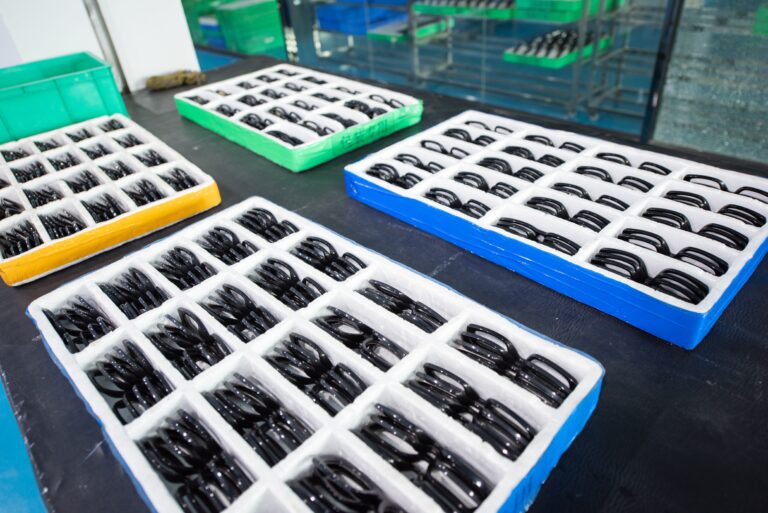
An inspection plan can include agreed dimensions, symmetry, surface appearance, colour consistency, hinge action, temple alignment, lens seating, logo placement and packaging. Project-specific functional or laboratory tests may also apply.
The international standard ISO 12870 covers requirements and test methods for spectacle frames. The responsible brand or importer should confirm which standards and regulations apply to the exact product and destination market. A material name by itself does not demonstrate compliance.
D Marjan’s eyewear quality-control guide explains how an approved reference sample and measurable criteria help align the brand, manufacturer and inspection team.
Questions to ask a TR90 eyewear supplier
Before approving production, ask the supplier to confirm:
- the exact proposed material or resin grade;
- whether the design uses existing or custom tooling;
- the sample and tooling-approval sequence;
- critical dimensions and tolerances;
- available colours and colour-approval method;
- hinge and component construction;
- applicable testing plan for the intended market;
- MOQ by model and colour;
- final-inspection responsibilities.
Two quotations that both say “TR90 frame” may describe different grades, components, test assumptions and customization levels.
TR90 Eyewear Manufacturing in Shenzhen, China
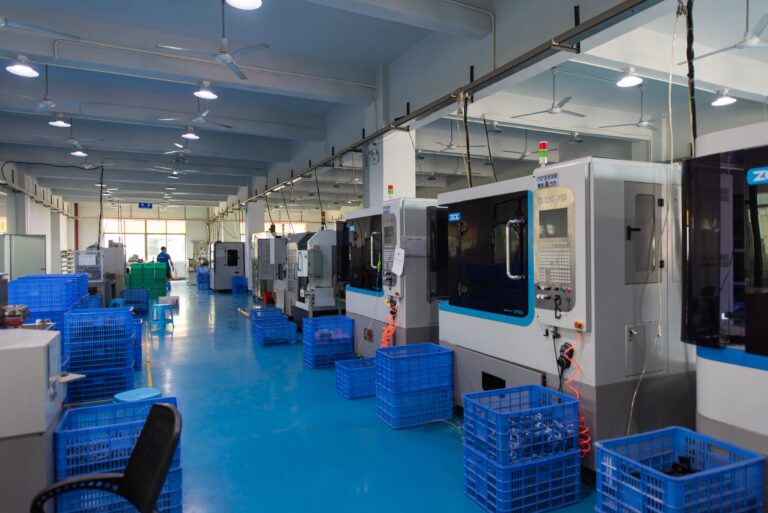
D Marjan Opticals supports brands evaluating TR90 glasses, injection-moulded eyewear and lightweight frame development. Through its Shenzhen, China factory operation, the team coordinates material confirmation, tooling, samples and production requirements for global OEM and private-label eyewear projects. Compare this route with other options through D Marjan’s eyewear material solutions.
Frequently Asked Questions
Is TR90 a type of plastic? It is commonly described in eyewear as a thermoplastic polyamide used for injection-moulded frames. Buyers should confirm the exact material grade offered for their project.
Are all TR90 glasses flexible? The degree and type of flexibility depend on material, geometry, thickness and construction. Finished-frame evaluation is more useful than relying on a general label.
Is TR90 always better than acetate? No. The materials use different manufacturing routes and support different design, finish and positioning goals. The better choice depends on the product brief.
Does a TR90 frame require custom tooling? A fully custom moulded design commonly requires dedicated tooling, while an existing suitable platform may offer customization without a completely new frame mould. The factory must confirm feasibility.
Develop a TR90 Frame From a Defined Specification
Share your drawings, target dimensions, material direction, colours, quantity and sales markets with D Marjan. The team can review manufacturability, sampling and production assumptions before a bulk commitment. Explore OEM eyewear manufacturing or contact D Marjan with your project brief.