EYEWEAR DESIGN & DEVELOPMENT
Design eyewear around the people who will wear it.
D Marjan helps brands define the audience, market, use scenario, design direction and construction route before a product moves further into development.
*Timing may vary with project complexity, revisions and speed of feedback.
DESIGN STARTS WITH CLARITY
A better design starts with a better conversation.
Before drawing, we recommend a video meeting to understand who the product is for, where it will be sold, how it should feel and what the commercial target looks like.
With this foundation, we can recommend a suitable material and production route before design work begins.
FIRST CONVERSATION
What to prepare for the first meeting
You do not need a finished technical drawing. Bring the clearest information you already have.
- 01
Market & Audience
Who the eyewear is for, where it will be sold and the position it should hold.
- 02
Use Scenario
Where and how the eyewear will be used, from optical and sun to fashion or performance.
- 03
Fit & Wearing Feel
Key proportions, comfort expectations and the intended wearing experience.
- 04
Material Route
The material and construction direction appropriate to the product ambition.
- 05
Visual Direction
Shape language, references, colour concepts and the character the brand wants to express.
- 06
Commercial Targets
Market position and product priorities considered early enough to guide development.
DESIGN DIRECTION & ENGAGEMENT
Align product ambition and budget before design begins.
Materials, construction, finishing and quantity can change the production route and unit cost. We use your target selling price and purchasing expectation to propose a commercially realistic direction.
Starter / Simple Direction
USD 15 - 25For basic and well-defined projects with clear quality expectations and controlled construction.
Elevated Direction
USD 25 - 40For quality-led brands requiring stronger direction, more detail and material alignment.
Signature / Complex Direction
USD 40 - 80+For complex projects, bespoke designs or construction that require higher development budget.
* Pricing guidance, not a fixed quotation. Final pricing depends on design complexity, materials, construction, engineering, quantity, sampling and final project specifications.
OUR DESIGN PROCESS
A clear, six-step design route
A structured process turns an early idea into a coordinated direction ready for the appropriate next stage.
- 01 DISCOVER
Video Consultation
Audience, market, use scenario, material, quality, budget and launch objectives.
- 02 PLAN
Development Proposal
Recommended material and production route, design scope and project assumptions.
- 03VISUALISE
Concept & Colour Matching
Shape, proportion, colour and key details translated into a reviewable visual direction.
- 04 REFINE
Review & Revisions
We refine the same eyewear style within the agreed brief until the design direction is confirmed. A new style or a major change of direction is scoped as a new design project.
- 05ENGINEER
Technical Drawing & Fit Direction
Key dimensions, structure and construction details prepared for physical development.
- 06 HAND OFF
Sampling-Ready Package
Approved engineering information moves into paid sample development.
TYPICAL DESIGN DEVELOPMENT10 –15 days
The usual window begins after the brief, design scope and project start are confirmed. Time waiting for client feedback and major changes to the approved brief may extend the schedule.
DESIGNED FOR A REAL WEARER
Fit decisions begin with your target customer.
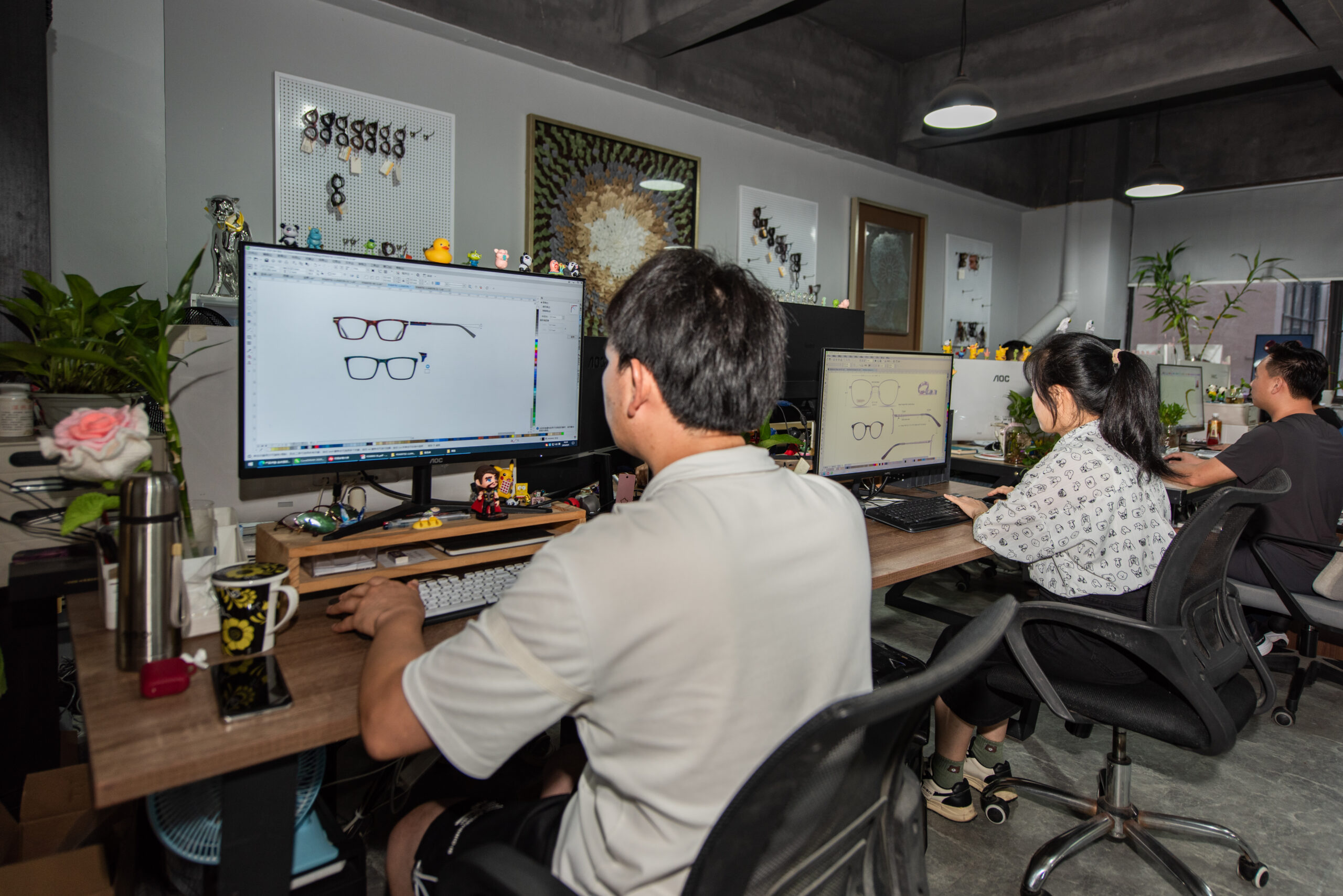
Our designers use the target market, wearer profile and use scenario to propose a starting size and fit direction. We do not treat regional or gender labels as a fixed size rule. The engineering drawing establishes the intended dimensions and structure. Physical comfort and final fit are then validated through the sample before bulk production.
- Audience and use scenario
- Key dimensions and proportions
- Wearing comfort
- Bridge and temple direction
- Sample-fit feedback where available
WHAT YOU RECEIVE
A design package built to move forward
A structured output that helps the project move confidently into the appropriate next development stage.
Discovery Summary
Clear next steps, market view and commercial direction.
Route Recommendation
Suggested approach and development route for your brand.
Visual Design
Colour directions, shape language and proportion for key styles.
Engineering Drawing
Key dimensions and construction references for sampling.
Sampling-Ready Handover
Approved files and notes prepared for efficient sampling.
COMMON QUESTIONS
Before your design consultation
Do I need a technical drawing to start?
No. A sketch, reference image, moodboard or clear description can begin the conversation. Technical definition develops as the direction becomes clearer.
Can I use an existing frame as a reference?
Yes. A reference frame can help communicate proportion, fit, construction or product character without copying another brand.
Can I bring fashion or product references?
Yes. Fashion, material, colour and product references can clarify the intended audience and visual language.
How long does development normally take?
Typical design development is 10–15 days. The actual timeline depends on project complexity, revisions and speed of feedback; it is not a production or delivery timeline.
What do the USD 15–25, 25–40 and 40–80+ ranges include?
They are design-pricing guidance for different levels of creative and technical development. Final scope and pricing depend on design complexity, materials, construction, engineering, quantity, sampling and final project specifications.
How do design revisions work?
The review and revision route is defined for the individual project. The development proposal clarifies the included work before design begins.
What happens after the engineering drawing is approved?
The approved design information can move into sampling and further product development before any production decision is made.
START A DESIGN CONVERSATION
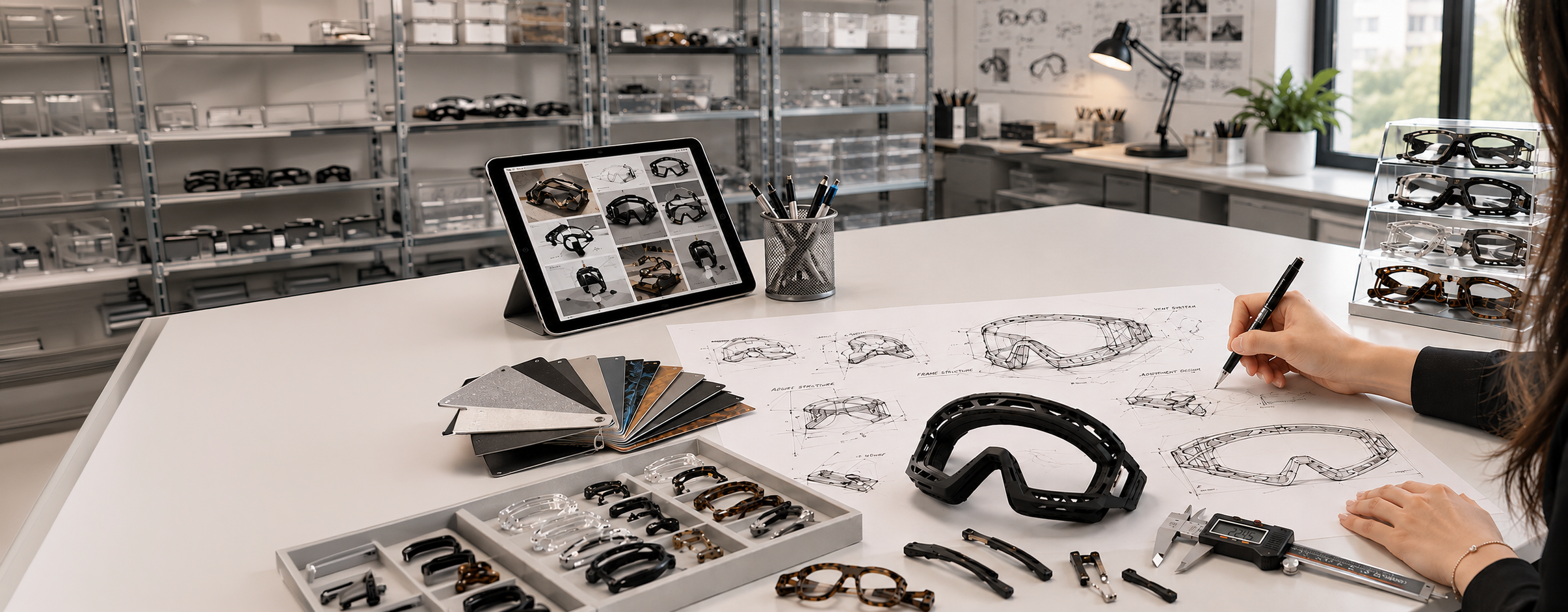
Develop a Made-to-Order Eyewear Direction
Create the right development direction and move into sampling with a coordinated design and technical foundation.