Quality Control · Factory Checklist
Eyewear Quality Control Checklist: What Brands Must Inspect Before Mass Production
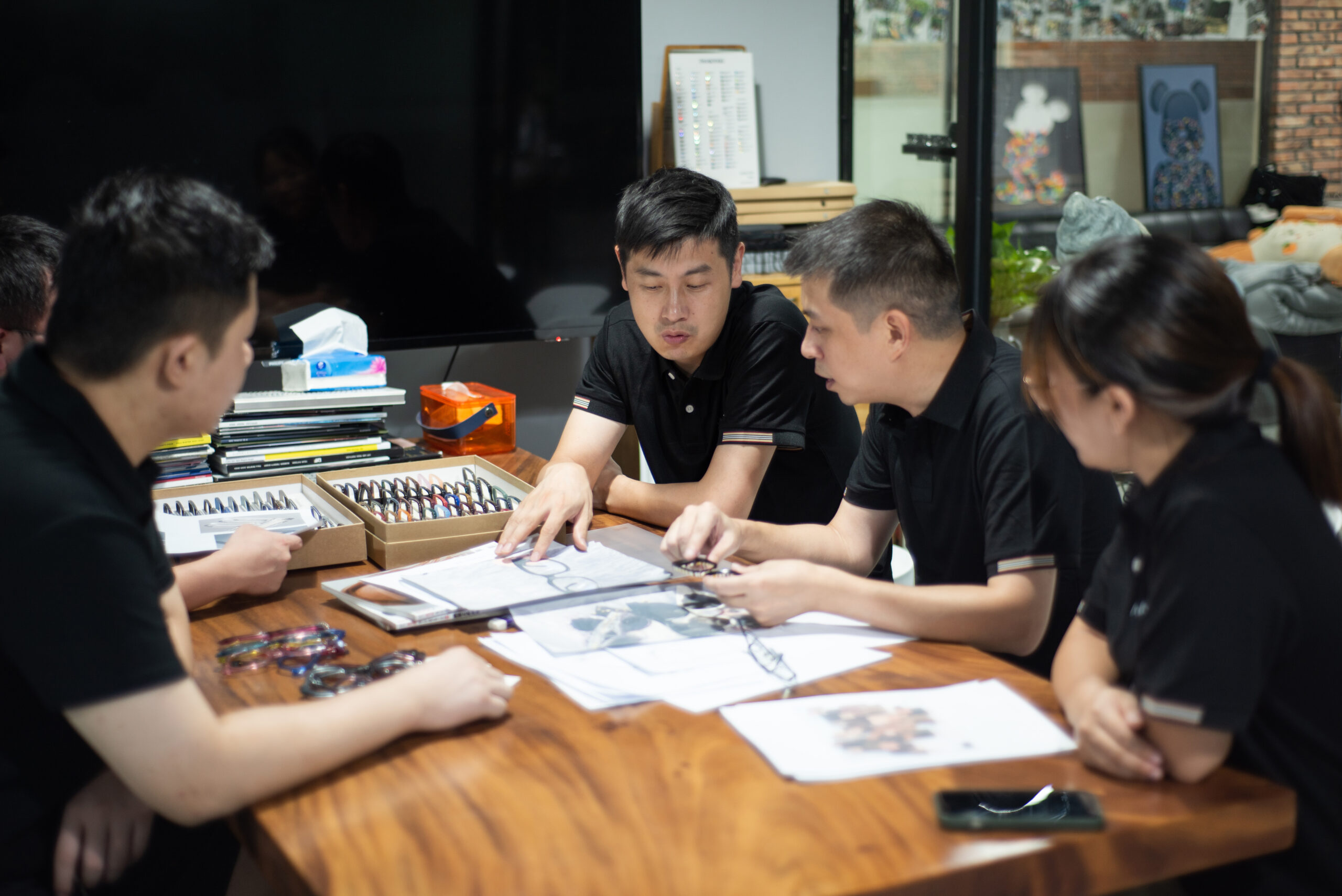
Quality control begins before production. The clearer the approved sample and specification, the more effectively a factory can inspect what it makes.
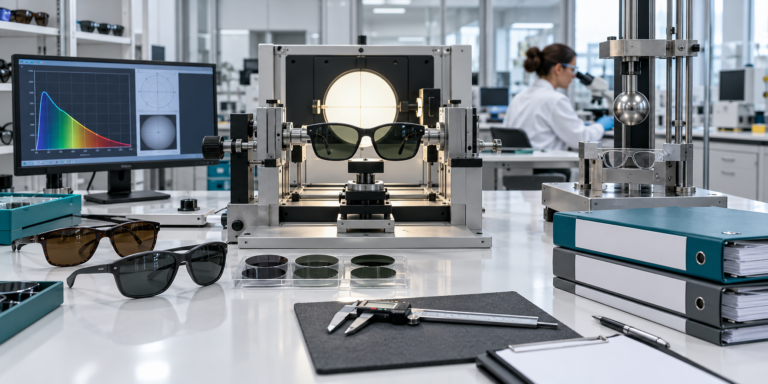
Eyewear quality control is not one final glance at a shipment. It is a sequence of checks tied to documented product requirements—from incoming materials and components to assembly, finishing and packaging.
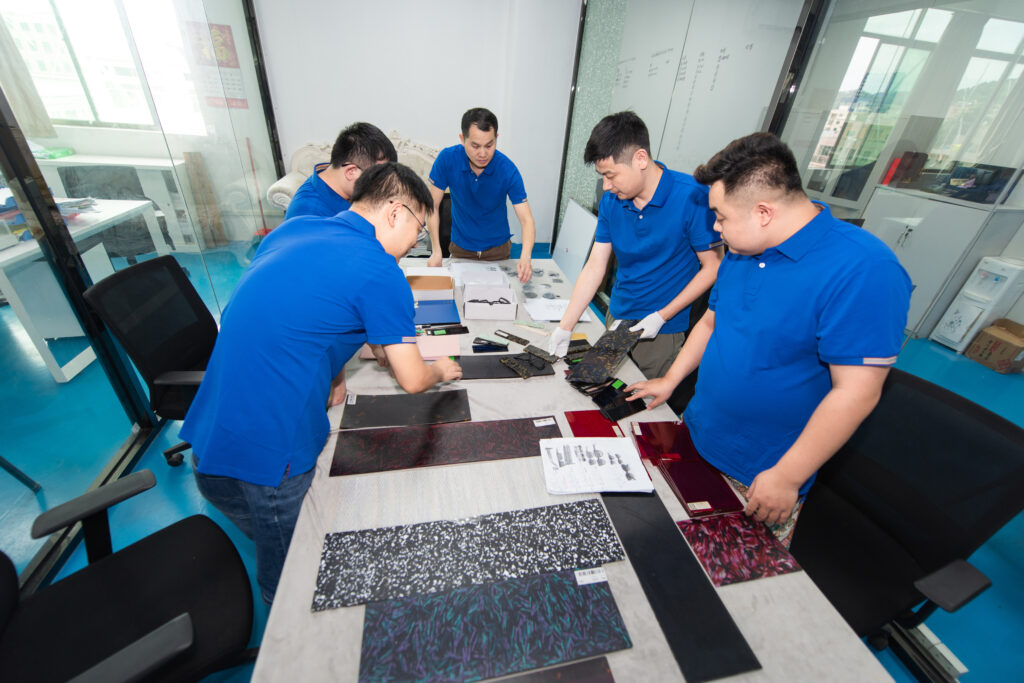
DMARJAN’s Shenzhen team connects development decisions to manufacturing-stage inspection. This checklist helps brand owners understand what should be defined before mass production begins.
Establish the Approved Reference
The final physical sample and written product specification should agree on dimensions, materials, colours, lenses, hardware, logos, finishing and packaging. If these references conflict, inspection becomes subjective.
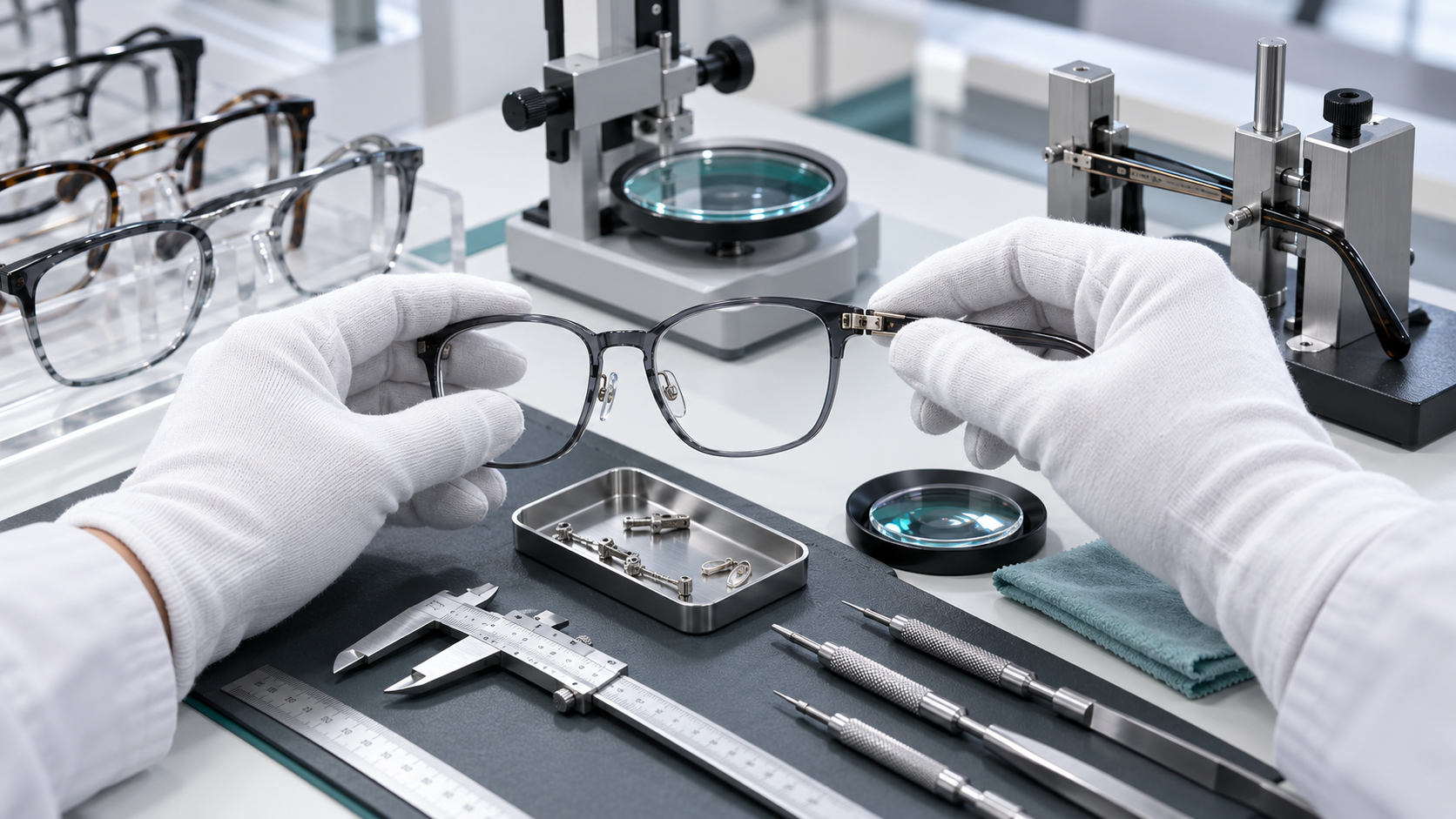
Check Frame Dimensions and Symmetry
- Lens width, bridge, temple length and key construction measurements.
- Front symmetry and lens-shape consistency.
- Temple opening, frame level and pantoscopic relationship where relevant.
- Fit against the approved sample and permitted tolerances.
Inspect Hinges, Screws and Moving Parts
Temples should open consistently without excessive looseness or resistance. Screws, hinges and decorative components should be secure, aligned and appropriate to the construction.
The inspection method should reflect whether the design uses standard hinges, spring hinges or another mechanism.
Review Lenses and Lens Fitting
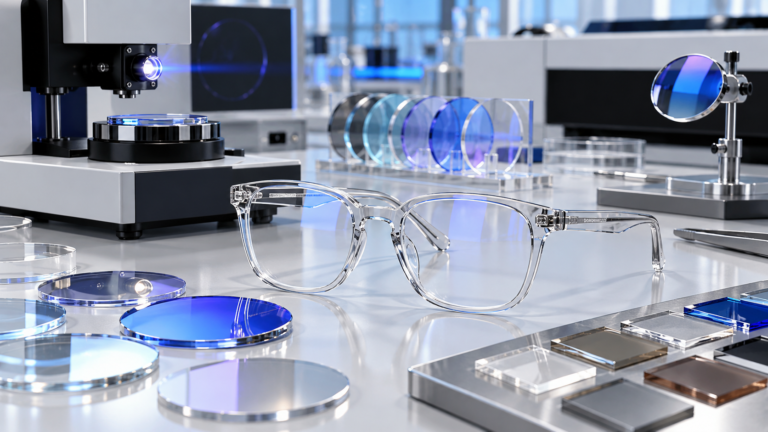
Check lens colour, surface condition, fit in the eyewire or groove, edge quality and alignment. Any claimed performance or applicable product requirement should be supported by the agreed documentation and testing route.
Examine Surface Finish and Branding
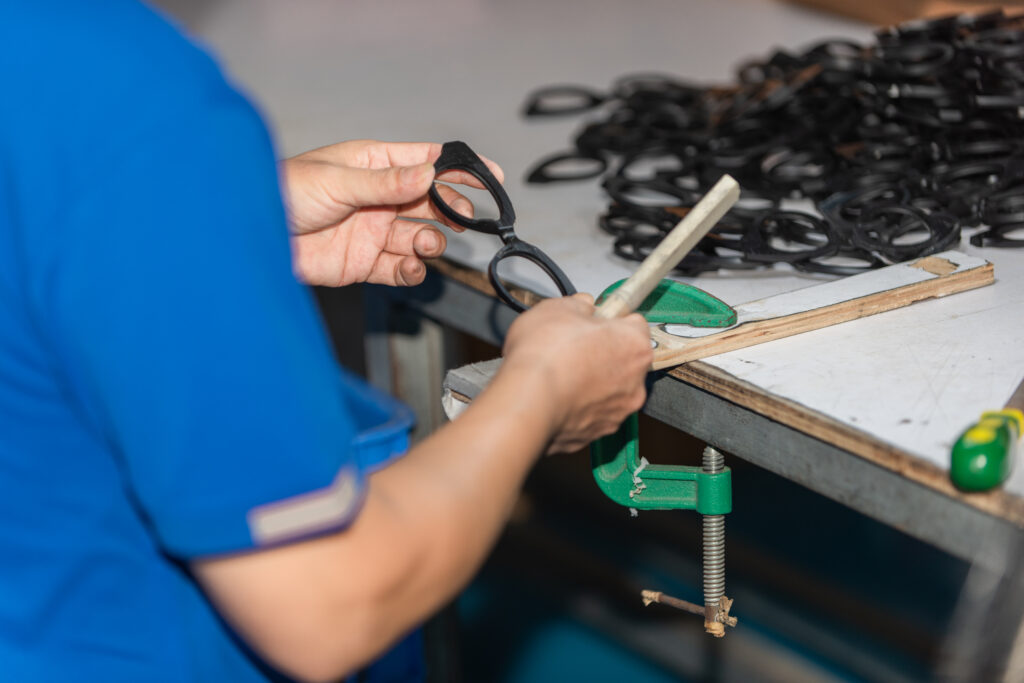
Look for polishing consistency, plating or coating issues, scratches, colour variation, adhesive residue and sharp or unfinished edges. Logos should match the approved size, position, colour and application method.
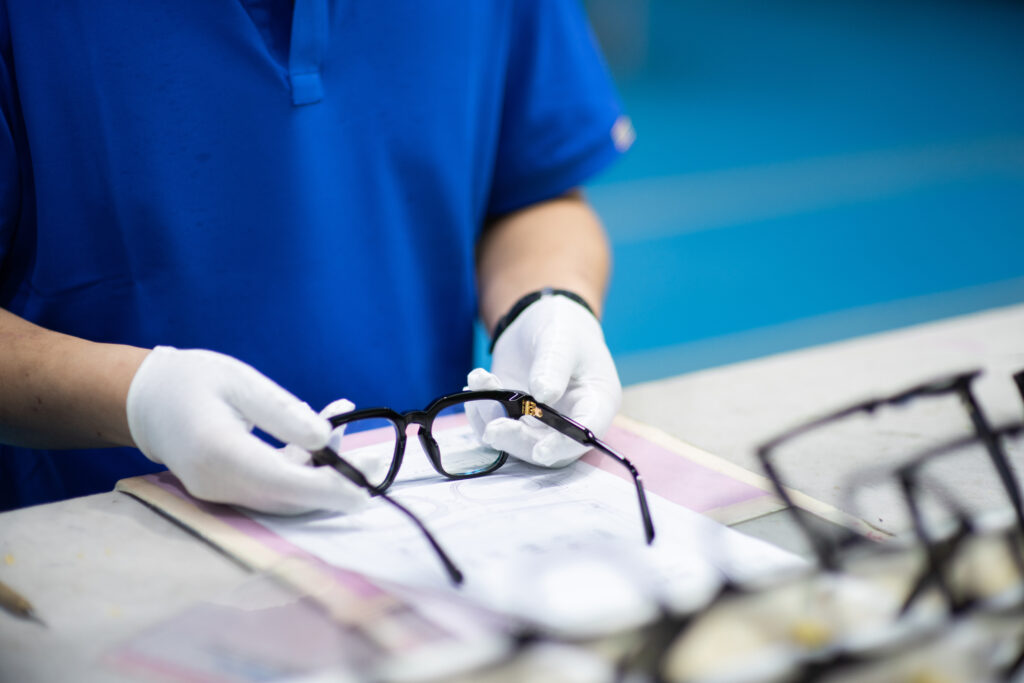
Use In-Process and Final Inspection
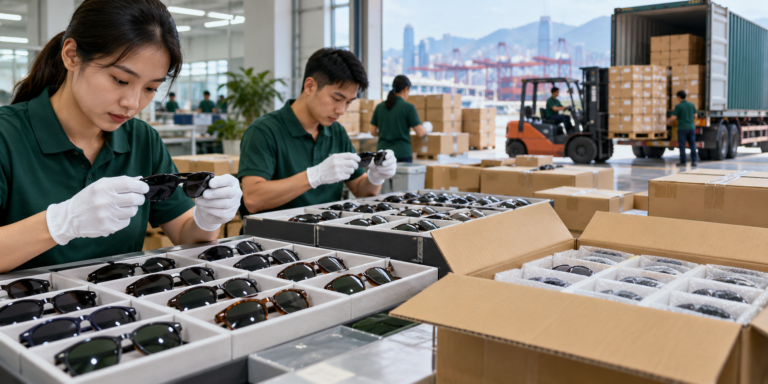
Finding a repeated issue during production allows the process to be corrected earlier. Final inspection then checks finished units and packaging against the approved requirements before shipment.
DMARJAN’s factory coordination keeps inspection connected to the product decisions made during sampling rather than relying on a generic checklist alone.
Inspect Packaging and Shipment Readiness
Confirm each frame is clean, correctly packed and matched with the approved case, cloth, inserts and labels. Outer cartons and protective packing should suit the agreed shipment method.
Document Findings and Corrective Action
Inspection records should identify what was checked, the result, any non-conformity and the agreed corrective action. Clear documentation supports both the immediate shipment decision and more consistent repeat production.
Quality cannot be inspected into an undefined product. It must be designed, approved and documented before production is measured against it.
Frequently Asked Questions
When should eyewear quality control begin?
It begins during development, when the brand and manufacturer define measurable requirements and approve the reference sample.
Is final inspection alone enough?
Final inspection is important, but in-process checks can identify repeated problems earlier and reduce the risk of widespread defects.
Does every frame use the same QC checklist?
Core checks are similar, but inspection should be adapted to the material, construction, lenses, components and destination requirements of the exact product.
Build Quality Control Into Your Eyewear Project
Share your product brief with DMARJAN and plan the approved sample, production specifications and inspection process through our Shenzhen factory.