Sustainable Eyewear · Manufacturing Guide
Eco-Friendly Sunglasses Manufacturing: Materials, Certifications and Private-Label Options
Sustainable eyewear works when material choices, product durability, packaging and environmental claims are treated as one manufacturing system—not as a marketing label.
Demand for eco-friendly sunglasses is creating an opportunity for brands, but it is also raising the standard of proof. Customers and retail partners increasingly want to know what a frame is made from, where the material came from and whether the finished product is designed to last.
For a private-label brand, the right starting point is a clear product brief. DMARJAN helps connect that brief to material selection, sampling, production and quality control through its Shenzhen eyewear factory.
Define What “Eco-Friendly” Means for Your Collection
There is no single sustainable material that fits every product. A brand may prioritise renewable content, recycled input, lower packaging weight, repairability, durability or a combination of these goals. Write the priority into the brief before selecting a frame.
- Identify the customer and intended retail price.
- Decide which environmental benefit can be supported with documentation.
- Set expectations for frame life, lens performance and replacement parts.
- Keep claims specific instead of using broad, unqualified language.
Compare Responsible Frame Material Options
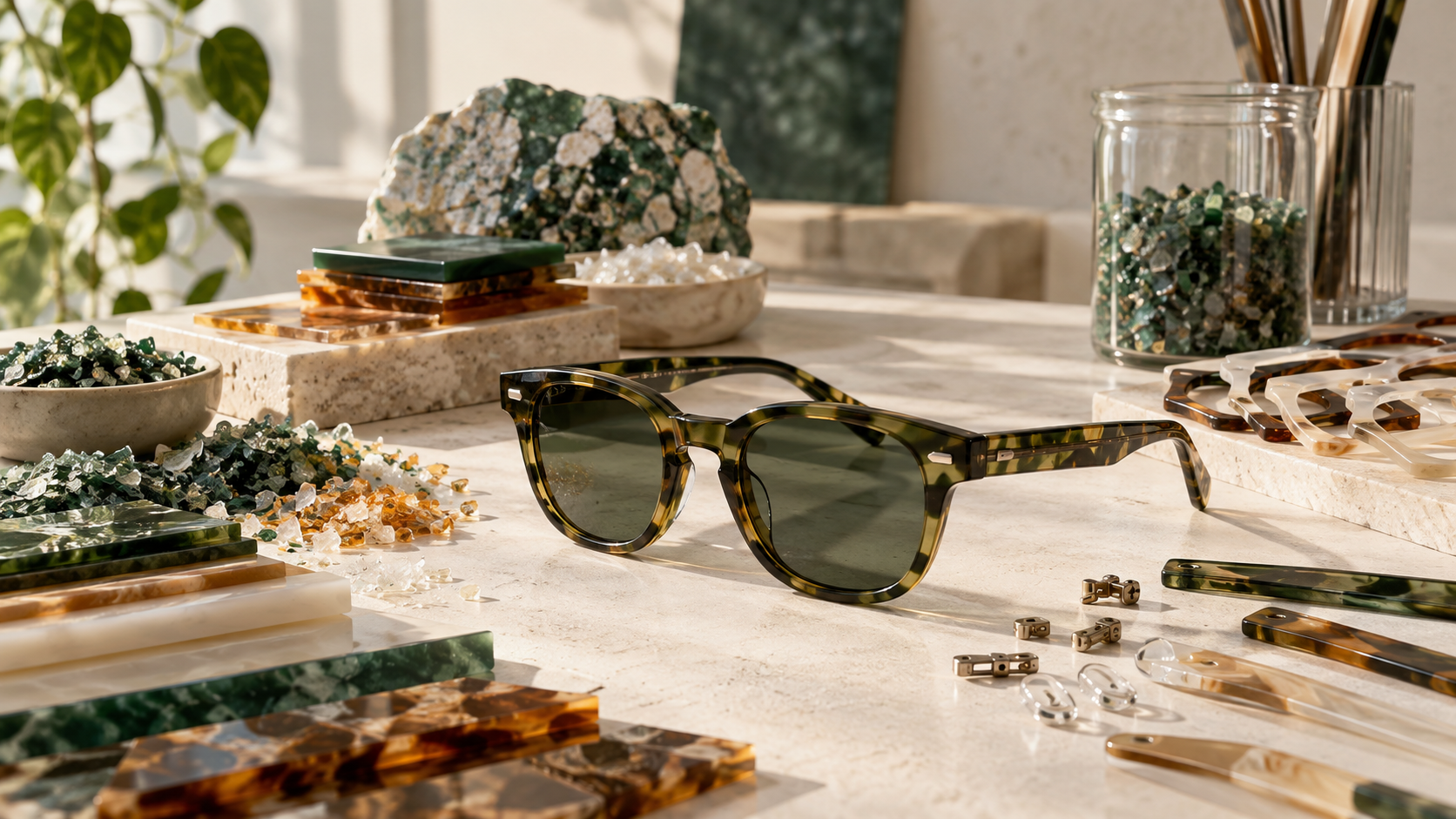
Possible directions include cellulose-based acetate, recycled-content plastics, selected metals and other lower-impact alternatives. Each option has different implications for colour, thickness, polishing, weight, tooling and minimum order planning.
A material name alone does not determine the result. The construction, components, finishing and assembly process decide whether the finished sunglasses feel premium and perform reliably.
Build Durability Into the Sustainability Brief
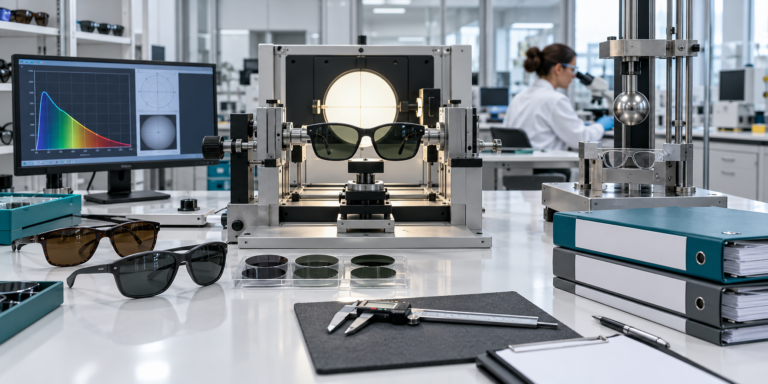
A frame that looks sustainable but fails early creates waste and damages customer trust. Hinges, screws, lens fitting, temple alignment and surface finishing should be reviewed alongside the material story.
DMARJAN turns the chosen direction into a physical sample so the brand can assess fit, feel, appearance and construction before bulk production.
Ask for Evidence Before Publishing Environmental Claims
Brands should request relevant material information and keep a clear record of what can be substantiated for the exact product. Requirements and acceptable wording differ by market, so environmental claims should be reviewed by qualified legal or compliance specialists before launch.
DMARJAN can help organise the product and supplier information available from the manufacturing process, while the brand remains responsible for final market claims.
Reduce the Impact of Packaging and Logistics
Cases, cloths, inserts and retail boxes are part of the product footprint. Right-sized packaging, recycled-content papers and fewer unnecessary layers can support the same design direction while reducing material use.
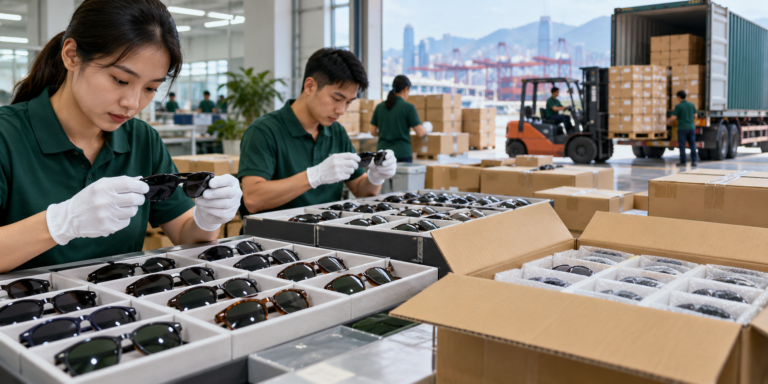
Coordinating packaging with eyewear production also helps the brand review the complete customer experience in one approval process.
A Practical Development Sequence
- Define the sustainability priority and target market.
- Shortlist material and construction options.
- Create and review a physical sample.
- Confirm available supporting documentation.
- Approve product, packaging and claims separately.
- Use the approved specification for production and QC.
The strongest sustainable product story begins with a specific, documented design decision—and ends with a frame customers can keep wearing.
Frequently Asked Questions
Can eco-friendly sunglasses still look premium?
Yes. Material colour, frame geometry, polishing, components and packaging can be developed to support a premium position.
Is bio-acetate automatically biodegradable?
Not every cellulose-based or bio-attributed material has the same end-of-life properties. Brands should confirm the exact supplier documentation before making claims.
Can DMARJAN support sustainable packaging?
Packaging direction can be coordinated with the eyewear project, including case, pouch, cloth, box and paper-insert options.
Develop a More Responsible Sunglasses Collection
Share your sustainability priorities, design references and target market with DMARJAN. We can map the material, sample and manufacturing route through Shenzhen.