Additive Manufacturing · Eyewear
3D-Printed Eyewear: Is It Ready for Commercial Manufacturing?
Additive manufacturing opens unusual geometry and rapid iteration, but a printable shape is not automatically a production-ready frame.
Interest in 3D printed eyewear comes from its design freedom, digital workflow and potential for smaller, more personalised runs. Commercial readiness depends on material behaviour, finishing, assembly and repeatability.
Brands should decide whether the technology is being used for early prototypes, tooling support or the final sellable product. Each route has different expectations.
Understand What the Process Changes
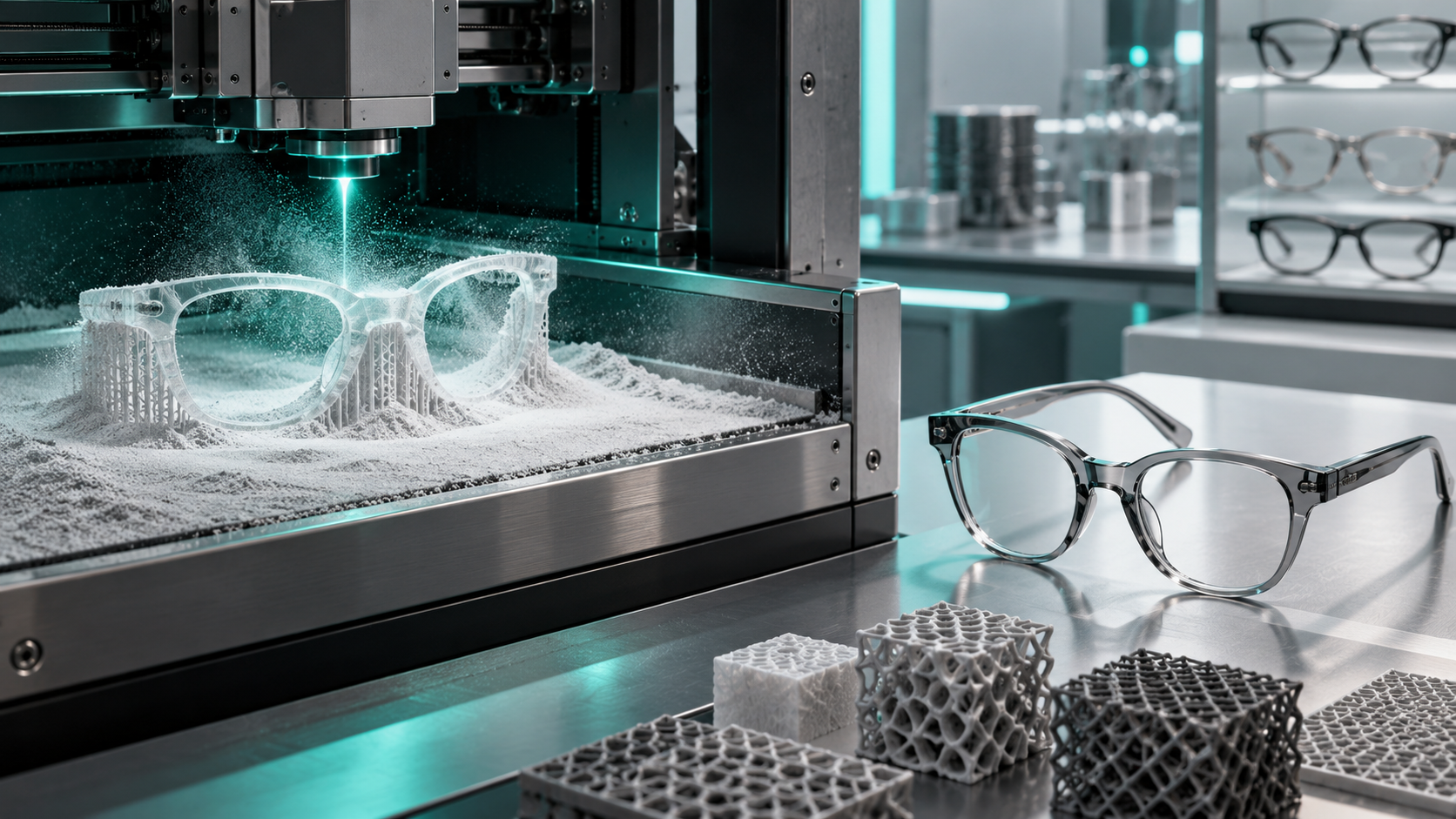
Additive manufacturing builds parts from digital models instead of removing material from a block or sheet. The NIST overview of additive manufacturing explains the core layer-by-layer principle and the importance of process control.
For eyewear, this can enable lattice structures, integrated features and rapid size variation, yet build orientation and post-processing affect the final surface and dimensions.
Separate Prototyping From Final Production
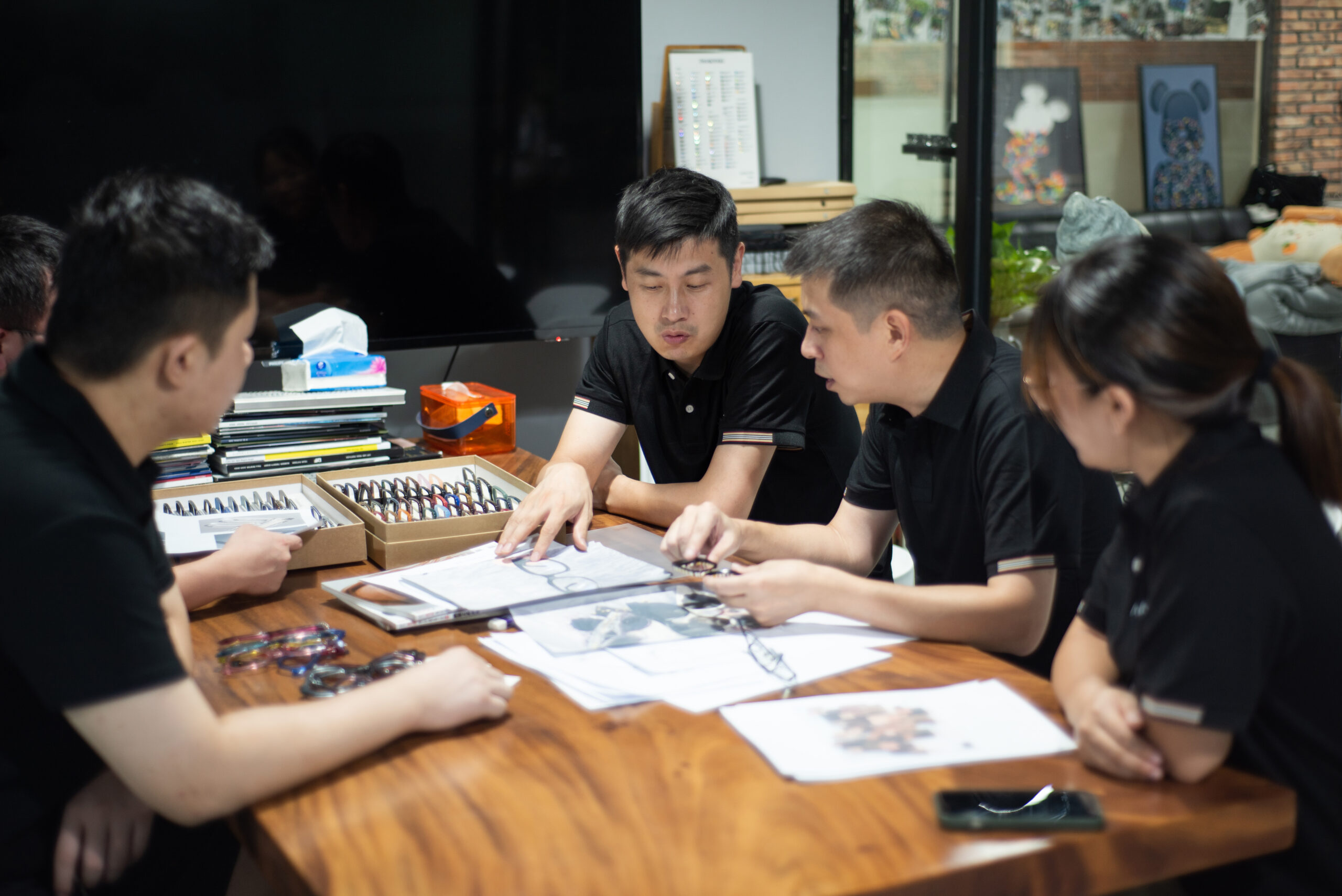
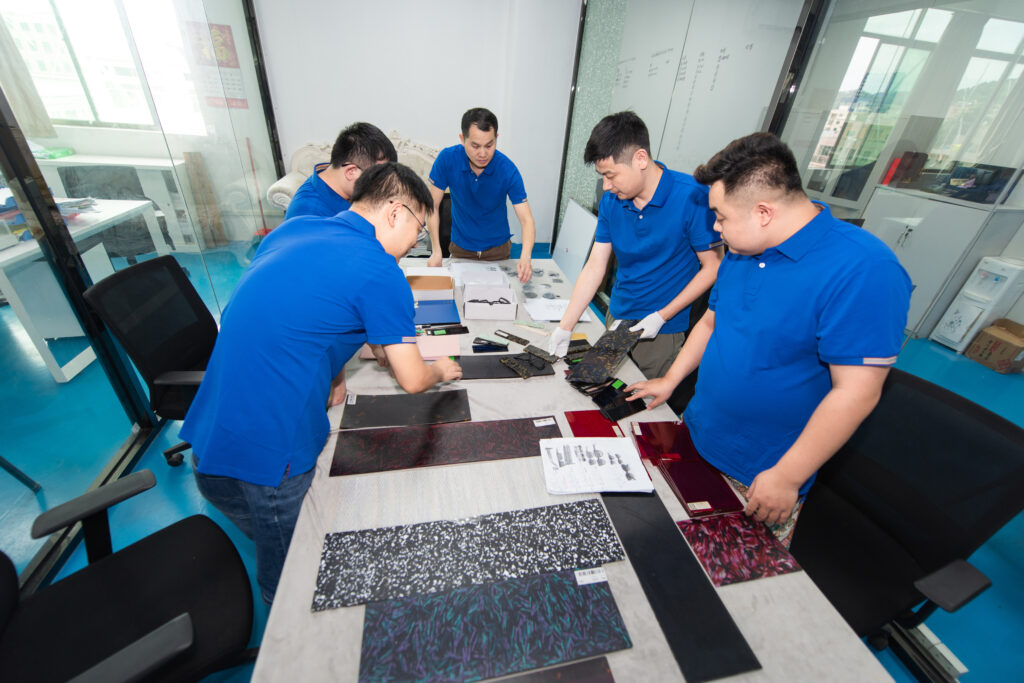
Printed models are valuable during eyewear sampling and prototyping. They can help assess proportion, fit direction and design changes before committing to conventional tools. A concept model may not use the same material, hinges or lenses as the final frame, so its approval purpose must be clear.
Evaluate Material, Finish and Components
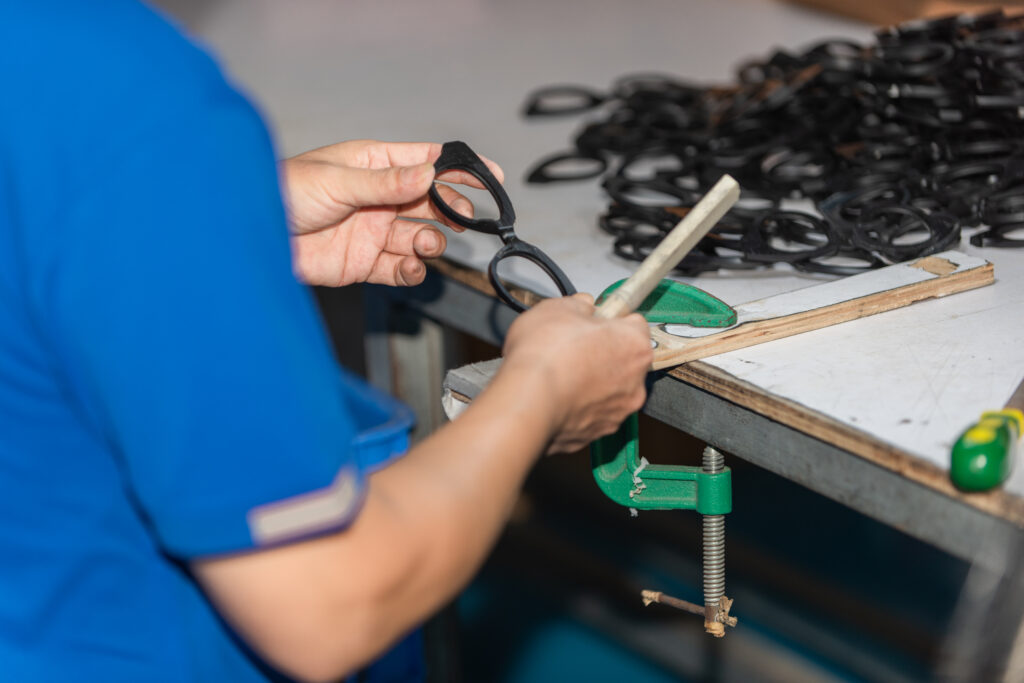
Ask about skin contact, heat response, fatigue, colour stability and cleaning. Printed surfaces may require tumbling, coating, dyeing or polishing. Hinges, screws and lens-retention details still need reliable integration.
Use eyewear design development to define dimensions and interfaces before optimizing the print file.
Prove Repeatability Before Scaling
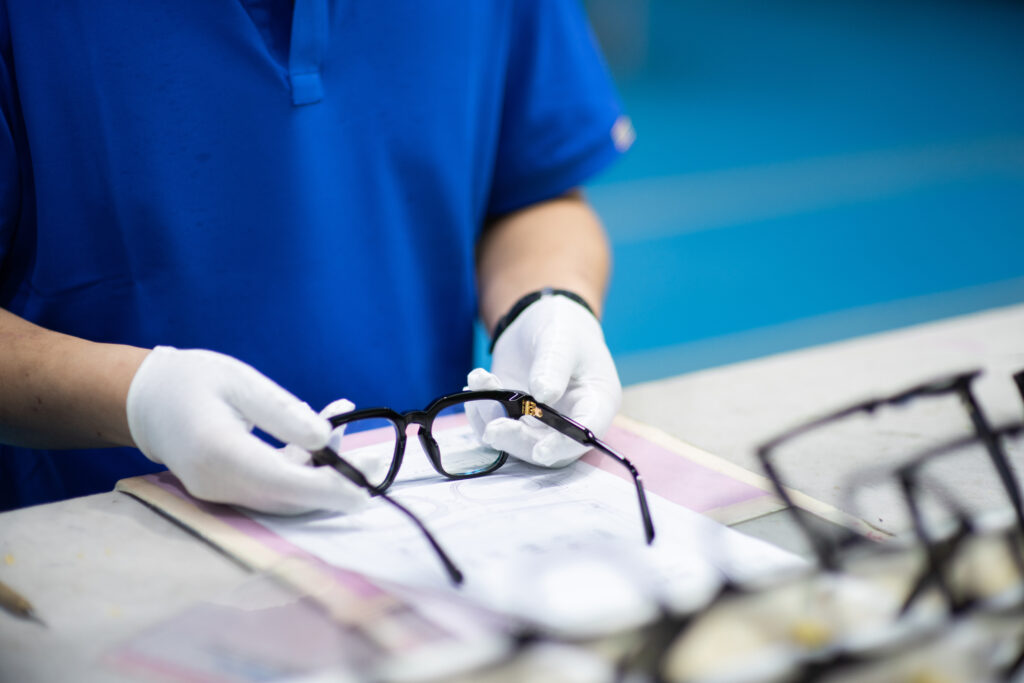
Inspect parts from different build locations and production batches. Dimensional checks, hinge cycling, lens fitting and relevant product testing should use the exact commercial material and finish. ISO lists ISO 12870:2024 for spectacle-frame requirements and test methods.
A structured quality-control plan is essential because digital consistency alone does not guarantee identical finished frames.
Decide Whether It Fits the Business Case
- Use printing when geometry or personalisation creates real value.
- Calculate finishing and assembly, not only machine time.
- Confirm capacity for repeat orders.
- Keep a conventional or hybrid route open when it improves scale.
The right question is not whether a frame can be printed, but whether it can be finished, tested and repeated as a dependable product.
Frequently Asked Questions
Is 3D printing suitable for mass production?
It can suit selected designs and volumes, but capacity, finishing time and repeatability must be assessed for the exact product.
Can a printed prototype approve final fit?
It can inform fit, although material and component differences must be considered before final approval.
Are printed frames automatically sustainable?
No. Sustainability depends on material, energy, yield, durability, logistics and end-of-life factors.
Assess an Additive Eyewear Concept
Send your design direction and commercial requirements for a practical review of prototype, hybrid and production options.